
MORE THAN A MEAL: BUILDING SAFE, INCLUSIVE DINING EXPERIENCES
According to the Centers for Disease Control (CDC), an estimated 1 in 13 children under age 18 in the U.S. have food allergies, which equates to about two students per classroom.
At FLIK Independent School Dining (FISD), we understand that food allergies impact every part of a student’s day. Families want confidence that their child can safely enjoy meals, participate in celebrations, grab a smoothie after practice, or attend a catered campus event without feeling isolated or different from their peers.
That’s why allergy awareness isn’t a one-week initiative for us — it’s embedded into our culture, our training, and the way we design every dining experience.
As experts in independent school dining and hospitality services, managing food allergies is one of our most critical aspects of the business. It requires consistent training and knowledge from our entire staff, strict guidelines, clear communication and transparency, and a culture of care to ensure all our students and school communities feel both safe and included when dining with us.
This Food Allergy Awareness Week (May 10-16), FISD sat down with Chelsea Anderson, one of our Regional Wellness Directors and Registered Dietitian Nutritionist, to discuss the importance of allergen awareness in schools, how families can better navigate food labeling, and the steps FISD takes to support students with food allergies across its dining programs.
“Over the years, I’ve developed a strong interest in food allergies through my work with FLIK because we serve so many students with allergies,” Anderson shared. “There’s also a personal connection for me because my nephew has a tree nut allergy. I’ve helped support my sister in navigating that experience, so I understand both the professional and personal side of food allergy management.”

A Commitment to Safety Starts with Standards
“Consistency is critical [to our allergy management program] because families are trusting us with their children’s safety every day,” Anderson said. “Parents are sending their children into an environment where they cannot personally oversee every interaction, so we have to get it right every time.”
As a core part of our business, FISD prioritizes inclusive dining experiences that allow students with food allergies to participate in campus life with confidence fully.
To support that goal, FISD implements a comprehensive allergen management approach that includes transparent ingredient communication, ongoing staff education, and operational consistency across dining programs.
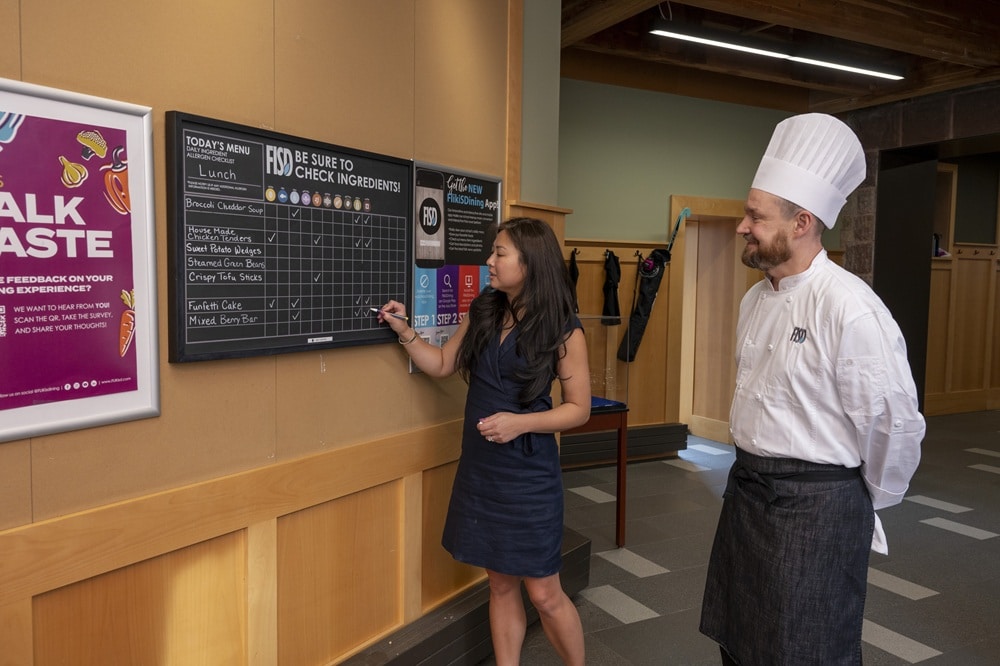
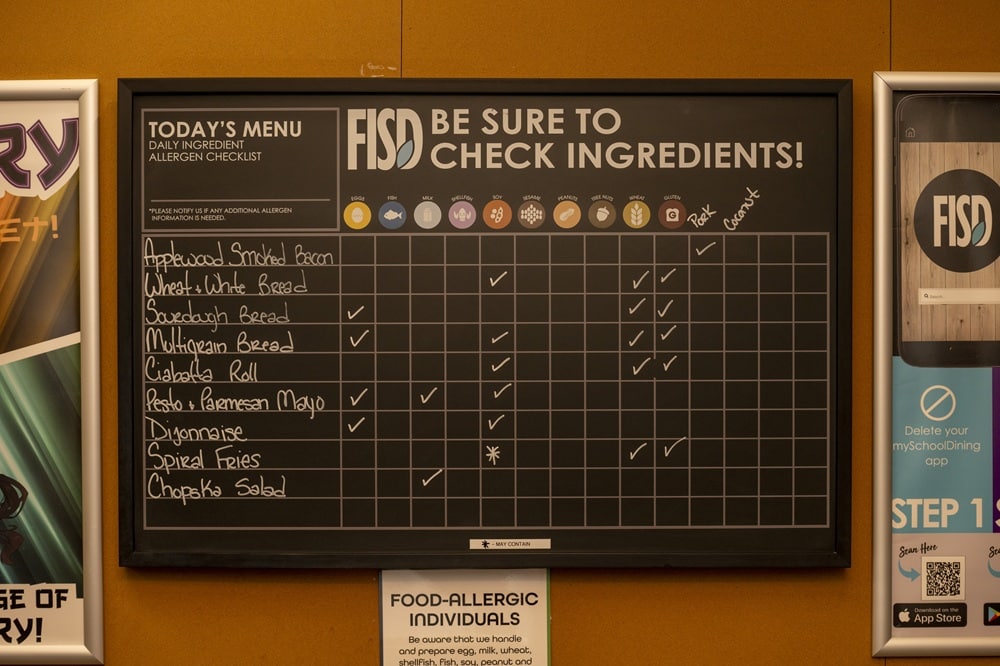
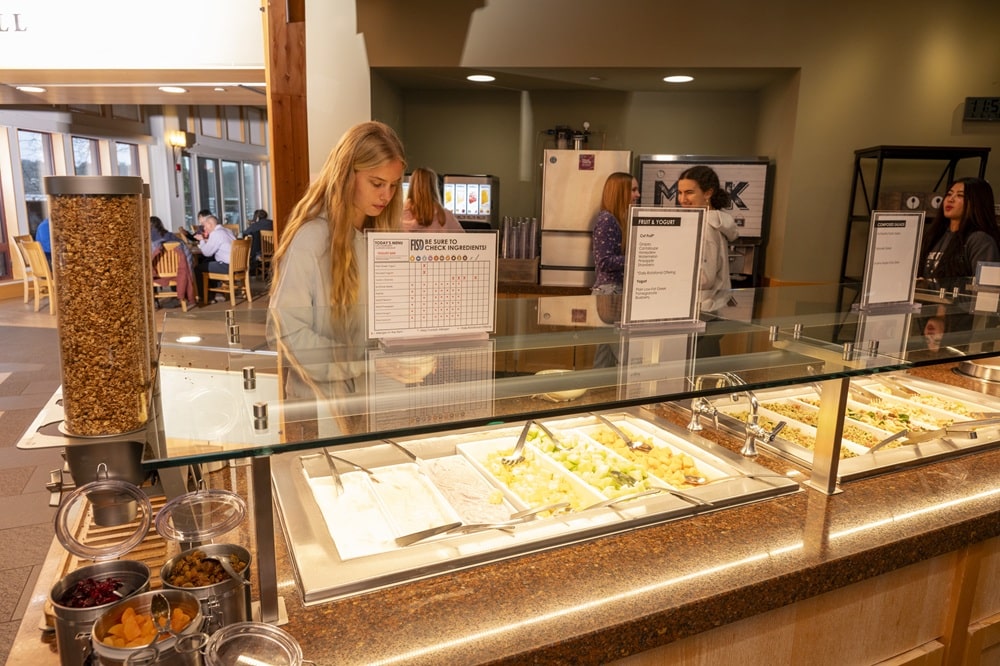
Our signature allergy boards clearly identify the top nine allergens plus gluten, helping students navigate dining spaces more independently and confidently.
We know parents are placing tremendous trust in school dining programs, and we take that responsibility seriously.
Education and Training Make the Difference
Training plays a critical role in food allergy safety. FISD schools obtain Food Allergy Research & Education (FARE) Check Silver certification, and dining teams participate in ongoing monthly training and education programs designed to keep allergen awareness top of mind throughout the year.
“Education is incredibly important, and that’s why we never want food allergy safety to become routine or overlooked,” Anderson explained. “Food allergies need to stay top of mind at all times.”
FISD’s approach emphasizes continuous learning and open communication among dining teams, students, and families. Managers and staff regularly review policies, discuss real-world scenarios, and strengthen procedures to help ensure consistency across every interaction.
Strong allergy management depends on knowledgeable, confident associates. That’s why training is a critical part of our approach.
Partnership with Families and Schools
Beyond dining hall operations, FISD also recognizes the importance of helping families navigate food allergy management in everyday life, including understanding food labels and precautionary allergen statements.
According to Anderson, common labeling phrases like “may contain” or “processed in a facility with” can create confusion for families because those statements are not regulated by the FDA in the same way as ingredient labels.
“Those statements really need to be evaluated on a case-by-case basis depending on the individual and their allergies,” she said. “Typically, families work closely with their allergist to determine whether certain foods are safe.”
That individualized approach is something FISD believes schools and families should look for when evaluating a foodservice partner. Effective food allergy management is not one-size-fits-all. It requires flexibility, transparency, and a willingness to collaborate with families to meet each student’s unique needs.
“Families should look for transparency around ingredients, recipes, and procedures,” Anderson said. “There should never be hesitation to answer questions or provide information.”
Looking Ahead
Food Allergy Awareness Week serves as an opportunity to reflect on the importance of education, vigilance, and inclusion in school dining. As food allergy awareness continues to grow nationwide, Anderson is encouraged by the increased education, research, and understanding surrounding food allergies and inclusive dining.
“I think awareness has improved significantly over the years,” she said. “People are becoming more educated about food allergies and taking them more seriously.”
At FISD, we remain committed to evolving our programs to meet the needs of our families and campuses, strengthening training, and supporting school communities with dining experiences that are safe, welcoming, and student-centered. We continually evaluate our training programs, operational procedures, and partnerships to strengthen food allergy management and create welcoming dining environments for every student.
By combining Registered Dietitian Nutritionist expertise, proactive communication, rigorous training, and student-centered dining experiences, FISD helps schools create safer, more inclusive environments where every student can thrive.